The 2010 Classic Yacht Symposium was held this past weekend in Bristol and Mystic. In addition to the opportunity to meet some great people, including a number of members of this forum, and a chance to soak in some very interesting papers, attendees had access to a number of other treats.
On Friday, a group of us went on a tour of current restoration projects in Mystic. At the MPG yard, restoration of AMORITA is in full-swing. You may remember that she was literally cut in half in a collision with the much larger SUMURUN in 2007. The damage was extensive, but MPG hopes to have her racing again in 2012.
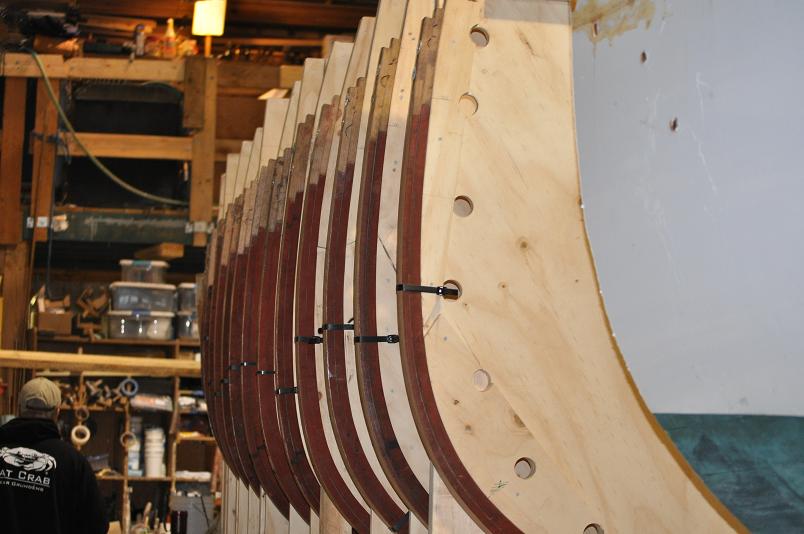 AMORITA's new frames
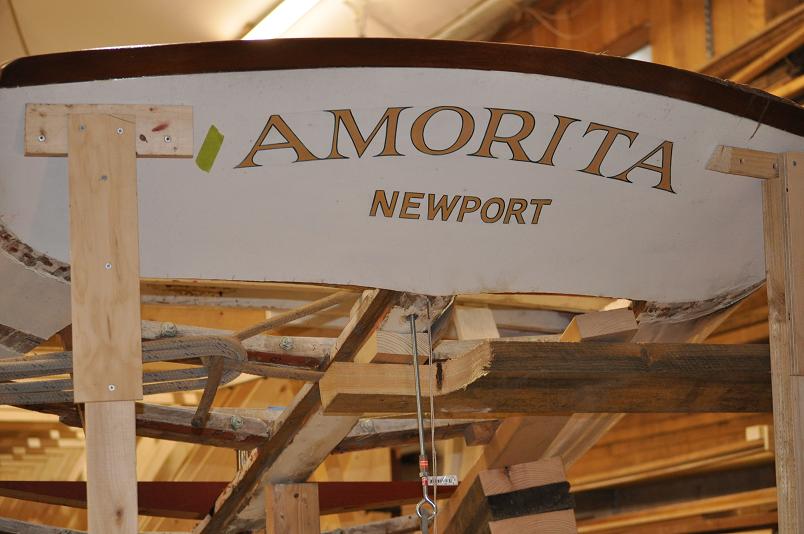 Classic Transom
Across the lot from the MPG shop is Bruce Avery's storage facility. There are quite a number of Herreshoff boats there, including Corinthian, Bagatelle, and 5 of the original Watch Hill 15s.
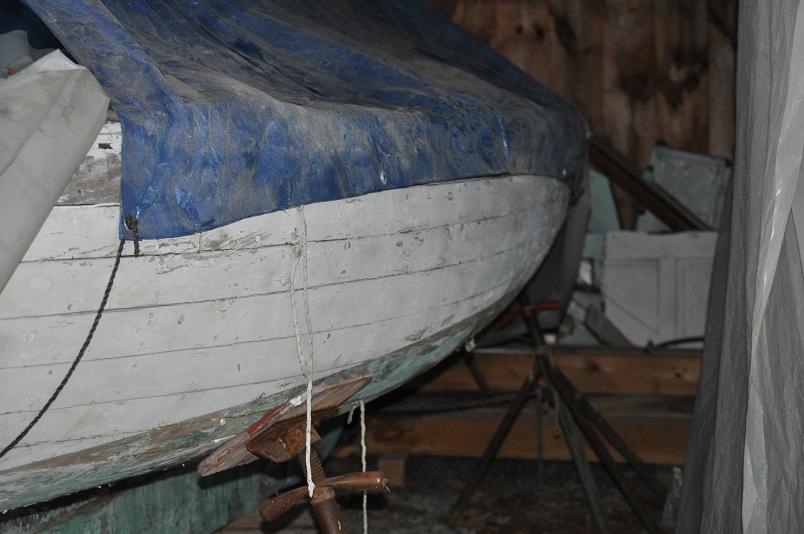 Watch Hill 15 GERALDINE
SPARTAN, the last remaining NY50, is nearing the end of a multi-year restoration led by MPG. She will be launched in May, attend events on the east coast this year and next, and then compete in the Med beginning in 2012. Her owners are quite particular, and the result is breathtaking.
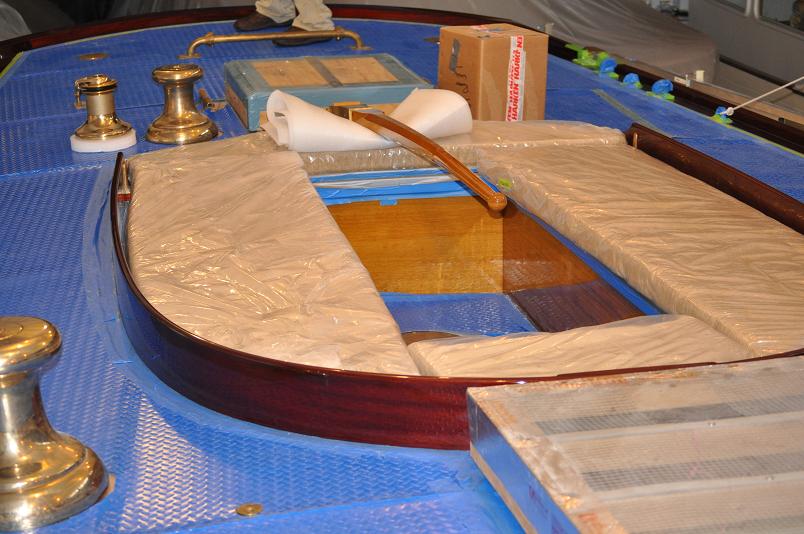 SPARTAN cockpit and tiller
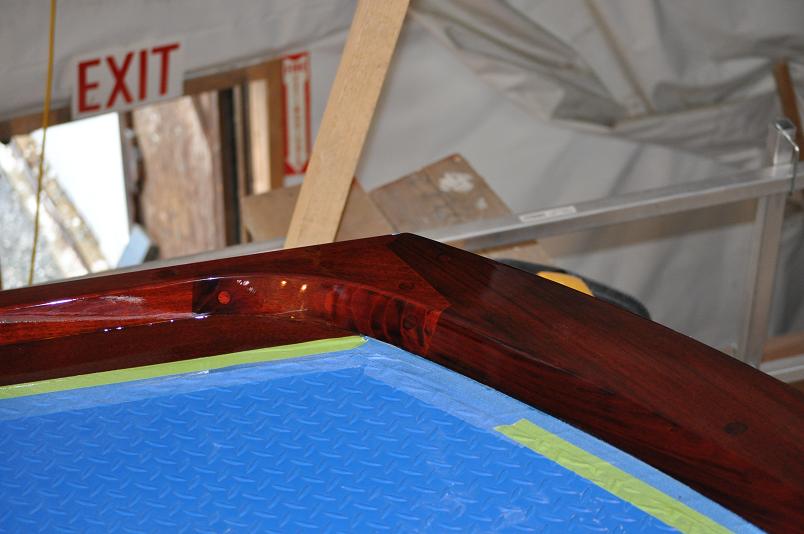 Beautiful Joinery
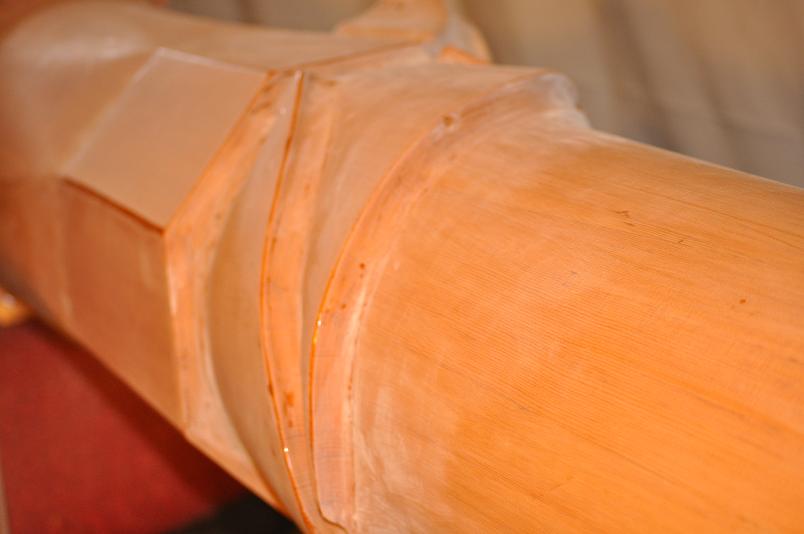 Details of SPARTAN's mast
The tour's last stop was a private view of the CHARLES W MORGAN project at Mystic Seaport. We were able to go down to the lowest level of the ship, where she is being completely reframed. We saw the huge timbers that comprise her frame, last seen by human eyes in 1841.
 CHARLES MORGAN frames, last seen in 1841
The Museum was open for self-guided tours on Saturday evening and Sunday morning. In light of the recent discussion on this forum, it was quite interesting to see a wall full of Herreshoff anchors in a whole range of sizes. It was also interesting to learn that the later 12-1/2s had travelers that were offset from center. Forum member Erick Singleman's eagle eye spotted this one.
 CLARA, in the Hall Of Boats
 PEEPER, being restored by Dan Shea
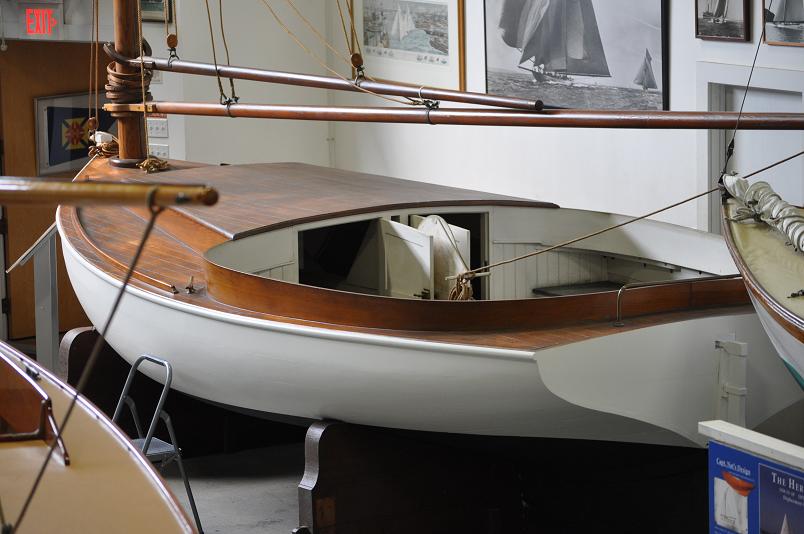 The oldest boat in the Museum, SPRITE
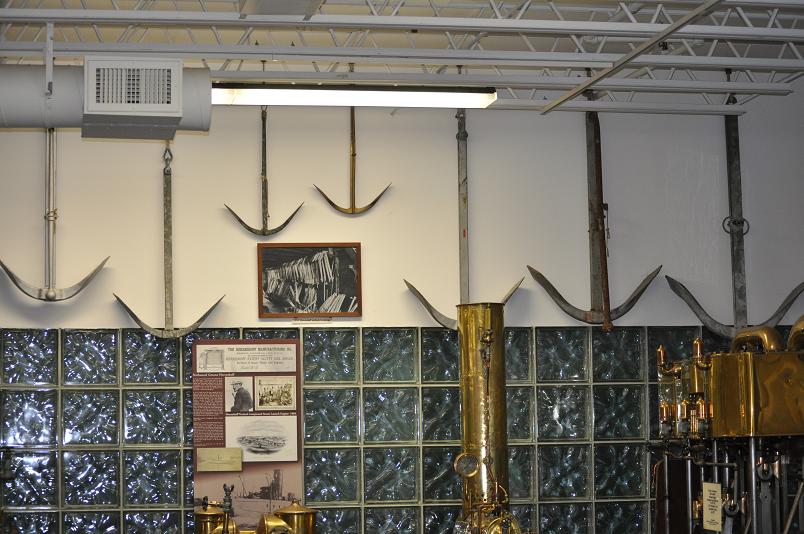 A wall of Herreshoff anchors
 Offset traveller in an H12. Erick Singleman is to the right
The last event of the Symposium was a tour of the NGH Model Room and Building 28, across the street. In addition to the nearly 500 design models, the Model Room contains Captain Nat's offset machine. He designed it in 1876 and had it built by Brown and Sharp. It is mounted on a solid, cast iron bed. According to Adam Langerman, it is just as accurate as today's laser measuring systems.
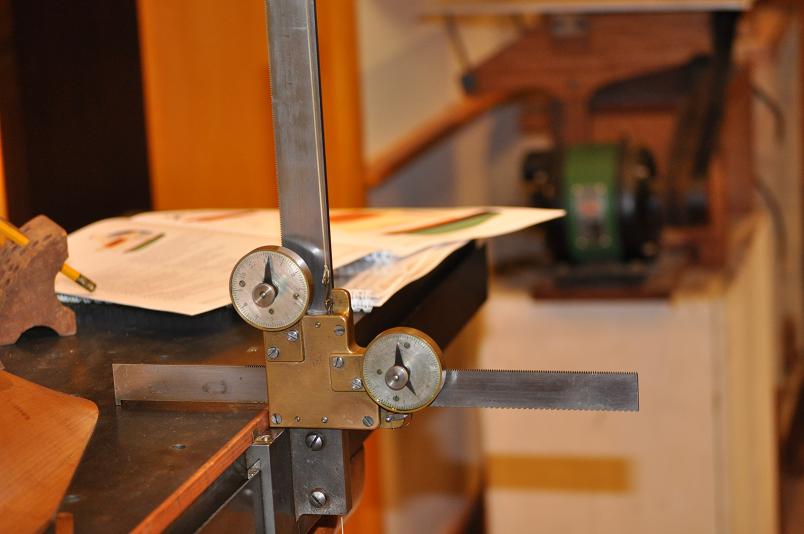 The NGH Offset Reading Machine
Design work is just concluding in the Model Room for the new H-20 by Herreshoff Designs. The boat will be a modern implementation of FANO, the prototype designed by NGH as an improvement to the 12 1/2. It will be built right on HMM property by Dan Shea, and looks like a real winner to me.
Thanks to Adam Langerman and the HMM staff for a great event.